Structural Drying in Woodbury, MN
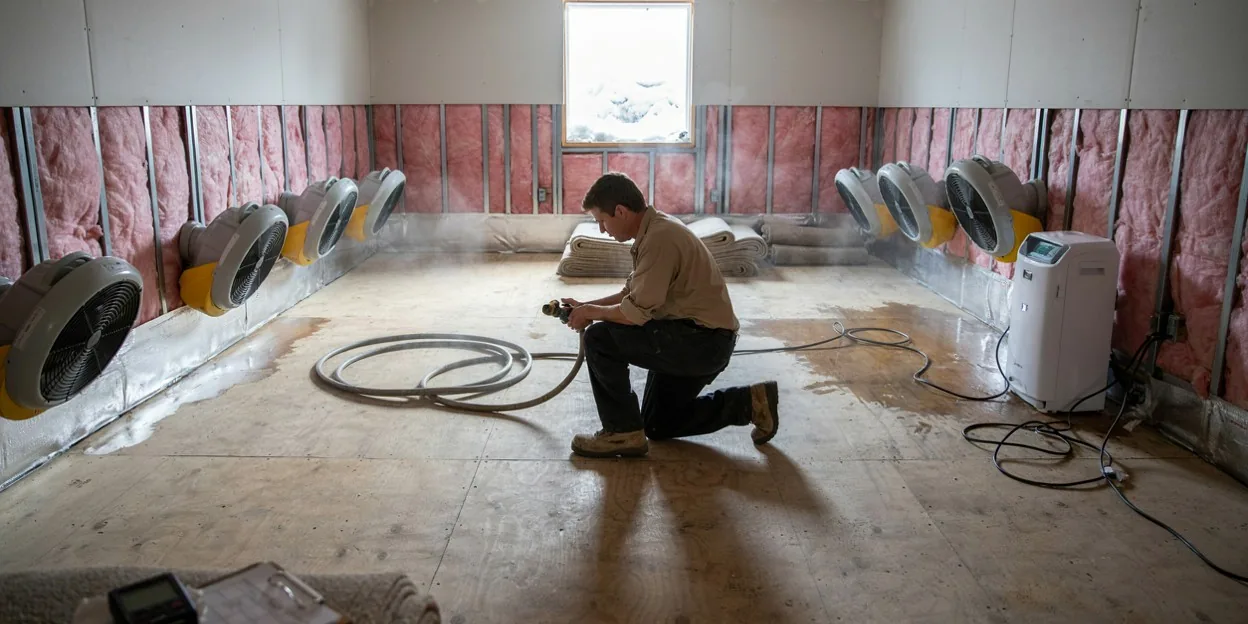
The water is gone. The carpet came up on Saturday, the pad went to the curb, and you ran a box fan in the family room all week. The room still smells like a wet towel, and the bottom of the drywall behind the couch feels cool when you press on it. This site puts you through by phone to an independent local provider who dries the structure of a house after a water loss in Woodbury and across Washington County.
Readings first, then the equipment
Structural drying starts with a map, not a machine. The crew meters the slab, the bottom plates, the drywall at several heights, and any wood trim, then compares each reading with a dry spot in the same material elsewhere in the house. That map says which materials are wet, how wet, and how far the water went. The equipment goes where the map says, not where the carpet was.
Air movers push air across wet surfaces so the moisture inside them can leave. Dehumidifiers pull that moisture out of the room air so the process keeps going instead of stalling in a damp, closed basement. The crew comes back to take readings while the equipment runs and moves things as the numbers change.
Leave it running, keep the door closed
Leave the equipment on, even overnight, even though it is loud. Keep the lower-level door closed so the dehumidifier is working on one space and not the whole house. Do not set the furniture back or lay a rug over the slab, and keep kids and pets out of the room with the cords. If a machine trips a breaker, reset it once and tell the crew.
Write down anything you notice: a new stain, a smell that gets stronger, a spot that still feels cold. Those are useful at the next readings visit.
What dries in place and what is already gone
Framing, sheathing, subfloor, and concrete dry in place in almost every case. Drywall that was wet only at the bottom and has been cut off at two feet leaves the upper wall dry and intact. Wood trim and doors that were metered early and have not swelled usually stay. Solid wood floors on the main level can sometimes be pulled back with drying mats if the crew got to them within a day or two.
Pad, wet blown-in insulation, foam-backed drywall that stayed wet for days, and laminate flooring are the materials that do not come back and have already been removed before the drying begins. The drying job ends when the readings reach their target and the log says so, and that log is what water damage reconstruction works from.
Drying a Woodbury basement in January is not drying it in July
A finished lower level in Woodbury is a cool, closed box in any season, and both extremes of the year make it harder. In January the outside air is dry but the basement sits near fifty degrees, and cold materials give up water slowly, so the crew runs heat alongside the dehumidifiers and the job takes longer than a homeowner expects. In July the air outside is heavy, the basement is the coolest room in the house, and an open window brings in more humidity than it lets out.
The water table adds its own problem. On lookout and walkout lots along the ponds, the slab is close enough to groundwater in a wet spring that the concrete itself reads high before anything leaks. The crew accounts for that with a baseline reading from a dry part of the slab, so the drying target is the right one for that house in that month.
Your adjuster will ask for the drying log: the equipment list, the daily readings, and the date the materials reached target. The crew keeps that from the first visit. Whether the loss itself is covered is a question for your policy, not for this site. If the water is still coming in or standing on the floor, the job is not yet drying; start with basement flooding cleanup or, if the pit is the cause, sump pump failure cleanup.
Calling about a basement that will not dry out in Woodbury
Have the address ready and say when the water came in and when it stopped. Tell the person who answers what has already been removed, whether any equipment is running now, which rooms still smell damp, and whether the walls have been opened. Call (651) 461-4569.