Basement Flooding Cleanup in Woodbury, MN
You went down to switch the laundry and the carpet at the bottom of the stairs was dark and cold. The family room rug was floating at one corner, the storage boxes along the back wall had gone soft, and the water was still coming out of the pit in the utility room. This site puts you through by phone to an independent local provider who cleans up flooded finished basements in Woodbury and across Washington County.
The pad under the carpet is where the water is hiding
The crew's first job is to find out why the water came in and confirm it has stopped, whether that means a pump that is running again, a main that is closed, or a storm that has moved off. Then the extraction starts, and it starts with the carpet. A weighted extractor pulls water up through the carpet and out of the pad, which holds many times its weight in water and will not give it up to a shop vac.
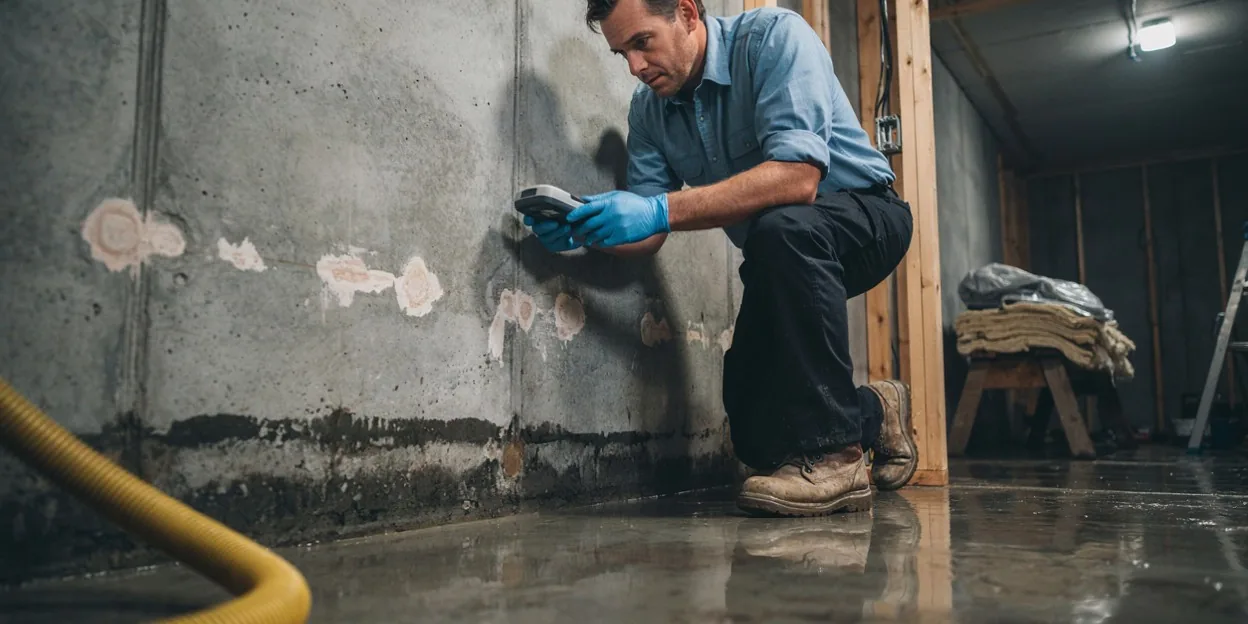
While that runs, the meter goes along the base of every wall, including the ones on the far side of the room. Water spreads across a slab under the pad in every direction, so a room that looks dry on the surface can read wet at the bottom plate. Those readings set how far the drywall comes off and where the drying equipment goes.
Kill the breaker, then lift what you can
If any outlet, the furnace, or the water heater is standing in water, shut the lower-level breakers off before you step in. When a pipe is the source, close the main before anything else. If the sump pump is silent, check its breaker and lift the float once; if it starts, let it run. Move the furniture legs onto foil or blocks, carry the boxes upstairs, and get any rug you can lift out of the room.
Take photos of each room before anything leaves it. Then call. The provider will ask what you see, and a plain description is all it takes.
Carpet sometimes stays, pad never does
Pad comes out in nearly every flooded basement, because it cannot be dried in place and it holds the water against the slab. Carpet is a judgment call: clean water from a pipe or a pit that was caught within a day can often be lifted, dried, and laid back over new pad. Water that sat for several days, or that came in through a floor drain, usually means the carpet goes too.
Drywall over foam board is the Woodbury problem. The paper face wicks water up, the foam traps it against the concrete, and the crew cuts the lower two feet off so the cavity can dry. Wood trim, doors, and the built-in bar are metered before anyone decides. Once the bulk water is gone, structural drying takes over and runs until the readings hit their target.
Why the lower level floods in Woodbury and not the kitchen
Nearly every house built in Woodbury since the 1980s stands on a full basement, and the lower level is finished in most of them. Lookout and walkout lots along the storm ponds and the golf course fairways put the slab close to a water table that comes up under it every March. A July thunderstorm that drops two inches in an hour fills the drain tile faster than a pump can move it, and if the power flickers the pit overflows into the utility room. The June 19, 2026 hailstorm was one of those afternoons, and the basements it filled were still drying weeks later.
Water that arrives through the pit or the floor drain is a different insurance question than water from a burst pipe. Many policies cover a sudden pipe failure and exclude groundwater unless a sump pump or sewer backup rider was added. No one here can say what your policy does. Have the crew document the water line, the readings, and the photos on the first visit so your adjuster works from a record. If the water came through the floor drain and smells like sewage, say so on the call, because that changes how the crew handles the carpet and the drywall. If a pump failure is the cause, sump pump failure cleanup covers the specifics of that job.
Calling about a flooded lower level in Woodbury
Have the address ready and say whether the water is still coming in. Tell the person who answers where it came from if you know, whether the pump is running, whether the power to the lower level is off, and roughly when you found it. Call (651) 461-4569.